What it is
An area of student need, involving difficulties with social interactions.
Teaching Strategies
Instructional
• Directly teach lessons to the whole class on specific social skills.
• Determine the student’s baseline of current functioning and next steps in social skill development (see the list of social skills below).
• Develop an alternative programming goal for the student on an attainable social skill improvement.
• Use media/literature examples to highlight pro-social skills and positive choices made by the characters.
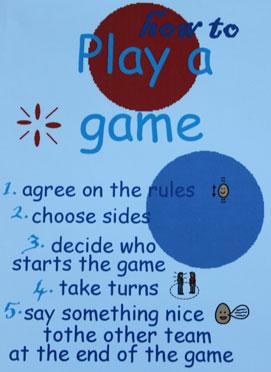
• Develop “how to” charts on various social skills of need.
• Use positive reinforcement for improvements.
• Use modeling, with articulation of social skills steps.
• Use social stories.
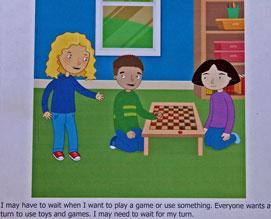
• Use visuals.
• Use role play.
• Teach character traits.
• Coach the student to follow steps when in real situations.
• Teach the meaning of classroom rules and consequences, and consistently apply these.
• Select student groupings and set roles to establish the best chances for success.
• Use a journal for the student to reflect on positive interactions and strategies.
• Develop strategies for recess/lunch/unstructured times.
• Consider referral to the school board social work and/or speech-language pathology staff.
Less...
More...
Environmental
• Use preferential seating to place student near others who would foster positive interactions, and close to the teacher for coaching.
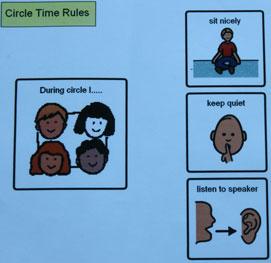
• Post rules and consequences.
• Post social skills visuals/charts with strategies.
• Provide activities for unstructured times (ball, game, etc.).
Assessment
• For group projects/presentations, provide structure, chunk requirements and provide frequent feedback.
• Assess the student in an area of strength (oral, written, with computer, etc.).
Resources
Understanding social skills in school age children and the role of parents. From The Hospital for Sick Children (SickKids).

For Purchase