


A medical condition of the eyes that involves a severe impairment in vision, not corrected by glasses.


• Consistently keep items in predictable/predetermined places (desks, chairs, scissors, etc.).
• Give the student appropriate warning of any changes to the classroom set up, and provide support for familiarizing with the new set up.
• Use preferential seating so that the student is close to the teacher for additional instructions.
• Reduce auditory noise in classroom.
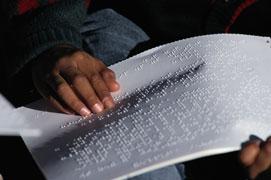
• Provide easy access to Braille equipment, if appropriate.
• Provide elevator access if necessary/available.
• Develop and practice a plan for emergency evacuations to ensure safety.

• Use assistive technology and Braille materials.
• Provide extra time.
• Use oral tests/scribe.
• Provide choices for projects/assignments.

A student may be fully or partially visually impaired. Those who are functionally blind may be able to see light and darkness, but not printed materials.
Resources


